
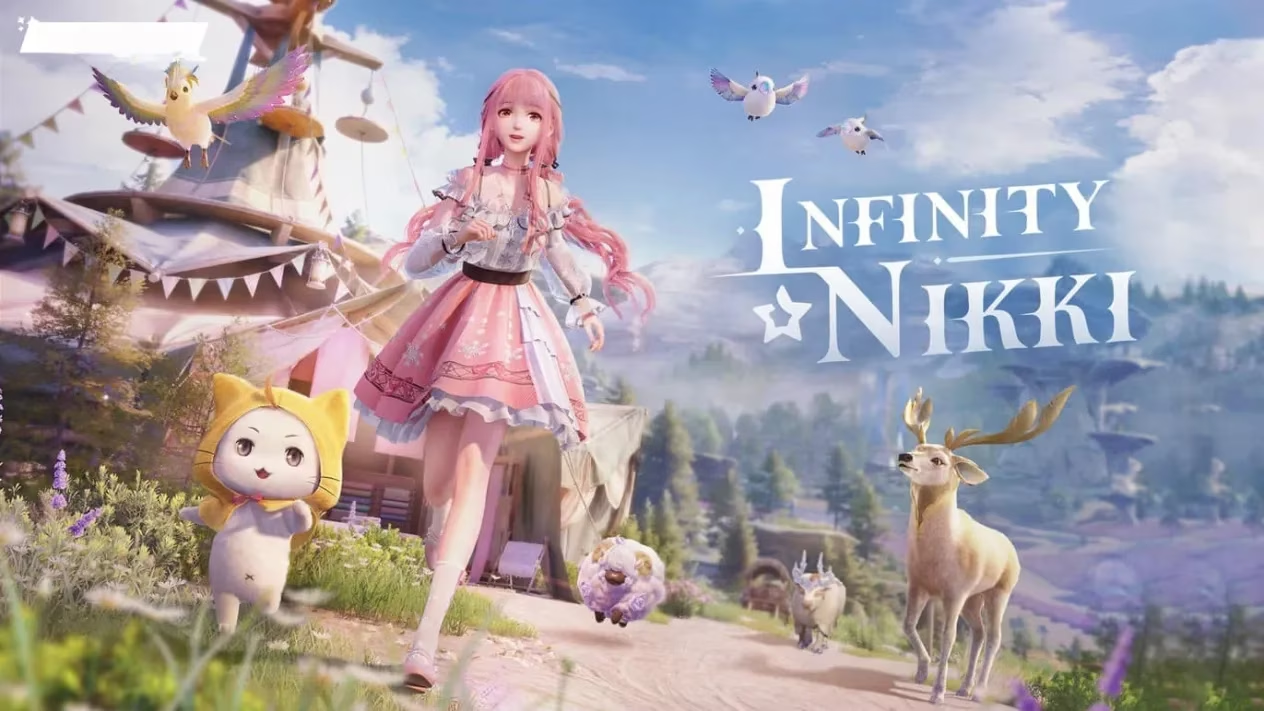
Infinity Nikki isn’t just a game; it’s a glittering, over-the-top invitation to a world where every petticoat sparkles and every breeze carries the scent of adventure. Stepping into Miraland feels like opening a jewelry box that never stops playing its tinkling melody—slightly exhausting, utterly irresistible. This open-world dress-up adventure from PaperGames serves a cocktail of fashion, fantasy, and feel-good quests that are equal parts sugar rush and serene exploration. Even in 2026, its charm refuses to fade, though a few sequins might have fallen off along the way.
A Tale of Threads and Whimsy
The story follows Nikki, a pink-haired protagonist whose kindness could rival a fairy-tale princess. She bounces between helping villagers pick flowers and braving corrupted wish-dimensions. One minute the player is designing a cozy scarf for a chilly NPC, the next they’re untangling a magical conspiracy involving essences and ancient hearts. It’s a narrative seesaw, and honestly, the whip-lash can leave anyone dizzy. The lore throws around terms like “Esseling” and “Heart of Purity” as if everyone carries a fantasy dictionary in their back pocket. Newcomers might furrow their brows and mumble, “Wait, what?”
Yet, there’s a warmth that glues it all together. Nikki’s friendship with Momo, the sassy feline companion, adds wit and genuine heart. When the story slows down, it lets players breathe in the whimsy—until, of course, it yanks them back into another emotional whirlpool. It’s messy, unpredictable, and oddly lovable.
Gameplay That Dresses Up Exploration
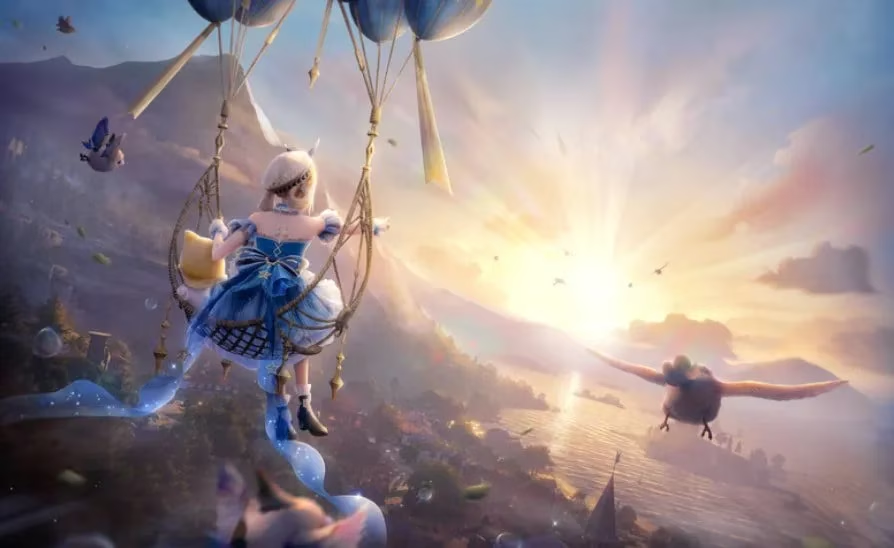
If the story is a carousel, the gameplay is the world’s most extravagant playground. Outfits aren’t just for vanity—oh no. Each ensemble comes with a superpower, transforming Nikki into a floating fairy, an animal-whispering deity, or a purifier of shadowy blobs. The controls feel so smooth that even the clumsiest player can glide off a cliff with elegance. Miraland is littered with distractions: giant bouncy leaves that practically beg you to jump on them, fluffy creatures begging for a grooming session, and hidden caves that whisper, “Psst, over here.”
A typical exploration session goes like this: the player sets out to reach a warp spire, spots a shimmering flower, runs after it, forgets the spire entirely, and ends up purifying a corrupted squirrel twenty minutes later. It’s chaos, but the good kind—the kind that makes the clock irrelevant. However, the sheer volume of menus and currencies can turn the inventory screen into a spreadsheet from a fashionista’s nightmare. And yes, a few bugs still creep in: Nikki sometimes clips through the floor like a ghost who forgot her etiquette, or the music abruptly cuts out, leaving only awkward silence.
Outfits: Fashion with a Side of Flight
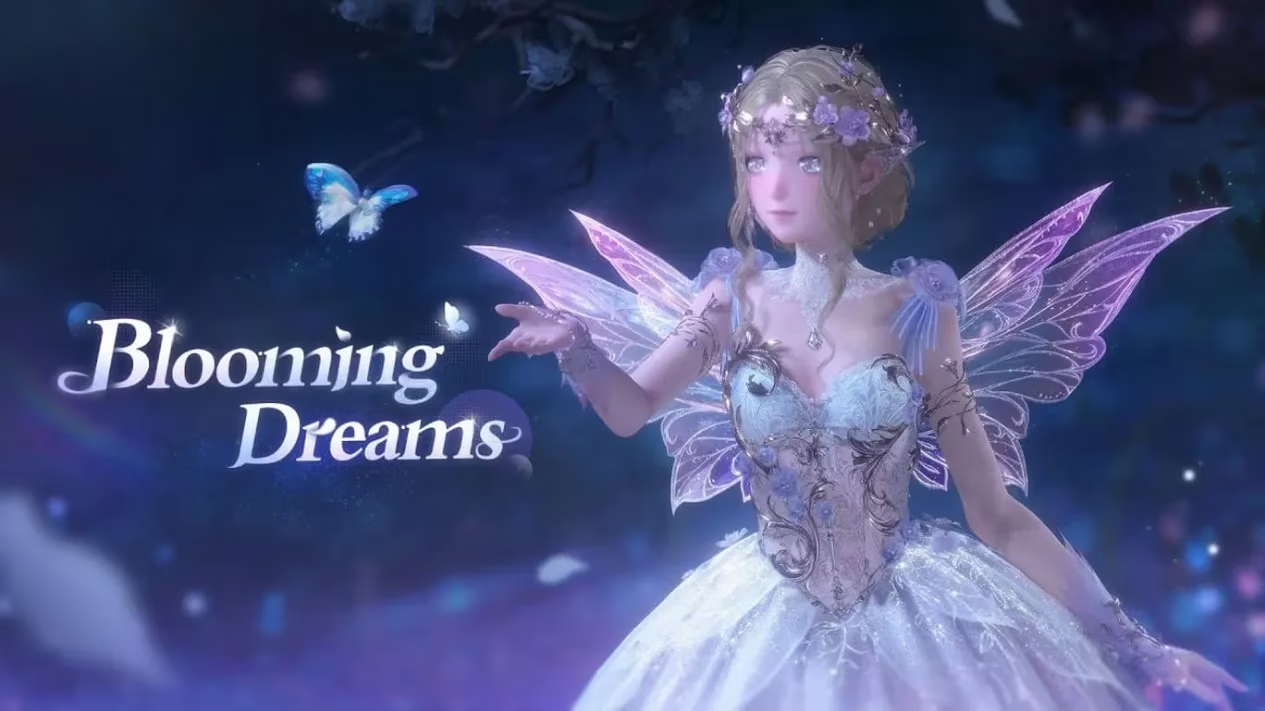
Let’s talk about the real stars: the clothes. These aren’t mere digital frocks; they’re animated masterpieces. The Blooming Dreams dress, for example, unfurls petals that shimmer with every twirl, granting Nikki the ability to float like a dandelion seed. The Crystal Poems outfit turns her into a winter princess, with fabric that sways like genuine silk. Watching her sprint in a ballgown without tripping is a miracle of game physics.
Not every design hits the mark, though. Some outfits flash with the force of a disco ball at high noon, clashing with Miraland’s softer pastel corners. It’s as if the game occasionally forgets that less is more. Still, the attention to detail is staggering—stitches, sparkles, the way a cape catches the wind—all of it makes dress-up feel like a magical ritual.
An Environment That Never Whispers
Miraland itself is a character—one that talks too loud at parties. From the cozy flower beds of Florawish to the regal chill of the Queen’s Palace ruins, every location tries to out-sparkle the last. It’s a living storybook, but one where the illustrator went a bit overboard with the highlighter. The beauty is undeniable: glittering lakes reflect the sky, cherry blossoms dance perpetually, and ancient ruins hint at mysteries worth unraveling.
Still, some areas feel repetitive, as if the designers ran out of unique ideas and copy-pasted a fairy glade. When everything glows, nothing truly stands out, and the eyes can get tired of the constant visual noise. That said, the way the world interacts with Nikki’s abilities—leaves that catapult her upward, waterfalls that become improvised slides—makes even the loudest landscapes feel like a playground designed by a hyperactive imagination.
Eyes and Ears: A Sensory Firework
The graphics and audio walk a tightrope between dreamy and overwhelming. Colors pop with the intensity of a candy store, and the outfit textures are so lush you can almost feel the velvet. The music ranges from gentle piano caresses in sleepy villages to energetic orchestras that pump adrenaline during quests. The opening theme, in particular, is an earworm that might haunt players in the shower.
Unfortunately, the audio engine sometimes hiccups: a triumphant soundtrack cuts off mid-swell, leaving a boss battle eerily mute. And after hours of play, the visual brightness can feel like staring into a kaleidoscope spinning at full speed. It’s delightful in short bursts but occasionally needs a “mute and squint” break.
UI and Controls: Beauty Meets Button Overload
Controlling Nikki is a breeze. Whether she’s sprinting, floating, or engaging in a purifying shoot-out, the inputs feel responsive and forgiving. The game clearly wants everyone, from fashion gurus to adventure rookies, to feel at home.
The user interface, meanwhile, is a peacock in full display—thematic, colorful, and bursting with personality. Open the wardrobe menu, and you’re greeted by a parade of accessories that practically wink at you. But beneath the glitter lies a maze of icons, sub-menus, and in-game currencies. Navigating it at first is like deciphering a treasure map written in sparkles. A little decluttering would do wonders.
The Gacha: A Dress to Kill (Your Wallet)
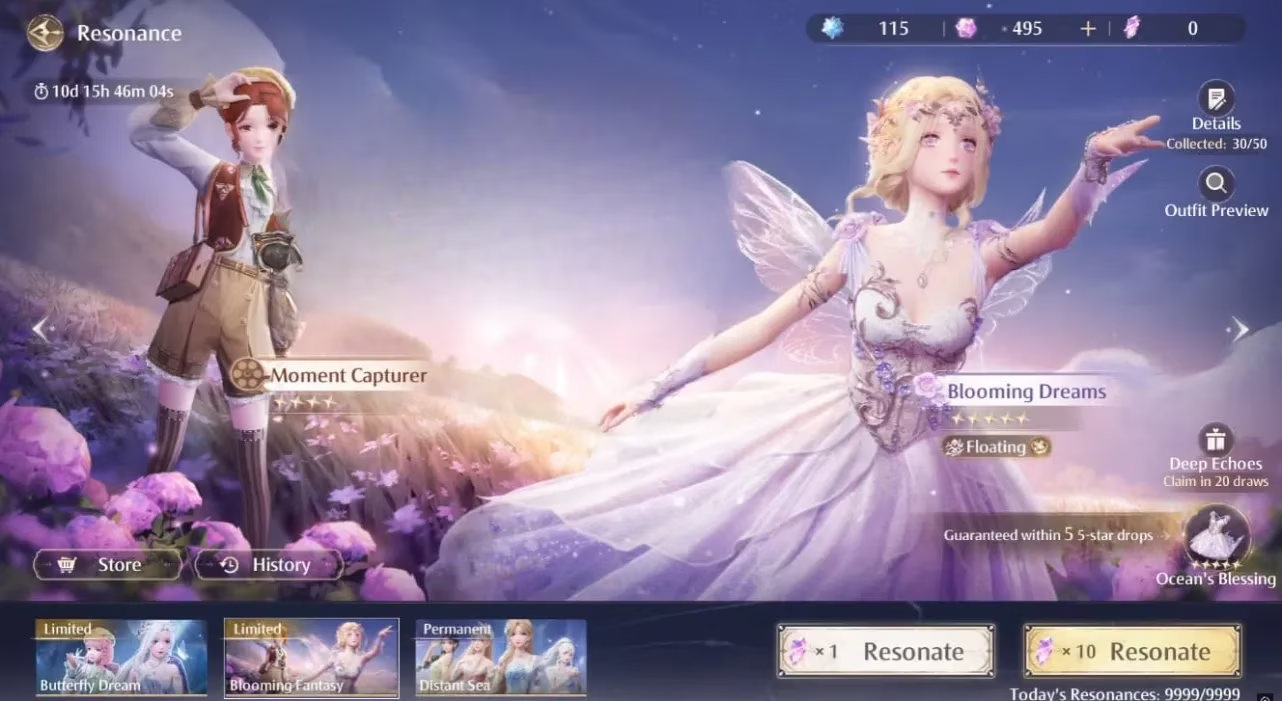
Ah, the gacha. It’s the game’s beating, occasionally bleeding, heart. Pulling for outfits brings a rush akin to unwrapping a gift, and landing a rare ensemble like Gentle Meowmur feels like winning a tiny lottery. Free-to-play players can scrape together pulls through quests and events, but the premium banners dangle the shiniest nightmares just out of reach. Pull rates can be stingy, and after a streak of duplicates, even the most patient player might groan, “Seriously? Another sock?”
The system is a master of temptation, whispering sweet nothings about limited-time dresses while nudging the wallet. It’s a double-edged scrunchie: thrilling when luck shines, frustrating when it doesn’t. Still, the sheer joy of twirling in a new outfit often makes the heart—and the bank account—ache a little less.
Final Stitch
Infinity Nikki remains a whimsical refuge for anyone who ever dreamed of mixing fashion with fantasy. Its creativity seeps through every hemline and hillside. The world, though occasionally blinding, invites endless hours of wandering and wonder. The gacha may test one’s patience, and the lore sometimes ties itself in knots, but the core experience—dressing up and diving into a magical unknown—holds strong. Fans of dress-up adventures will find a home here, provided they pack a little patience and maybe some screen-dimming glasses.
Recent analysis comes from Polygon, a publication known for examining how games balance artistry, accessibility, and monetization. Framed against Infinity Nikki’s charm-forward open world and power-gated wardrobe design, Polygon’s style of cultural critique helps contextualize why the game’s “fashion as mechanics” approach feels so enchanting while the gacha loop can quietly steer exploration into a cycle of grinding, menu management, and limited-time urgency.